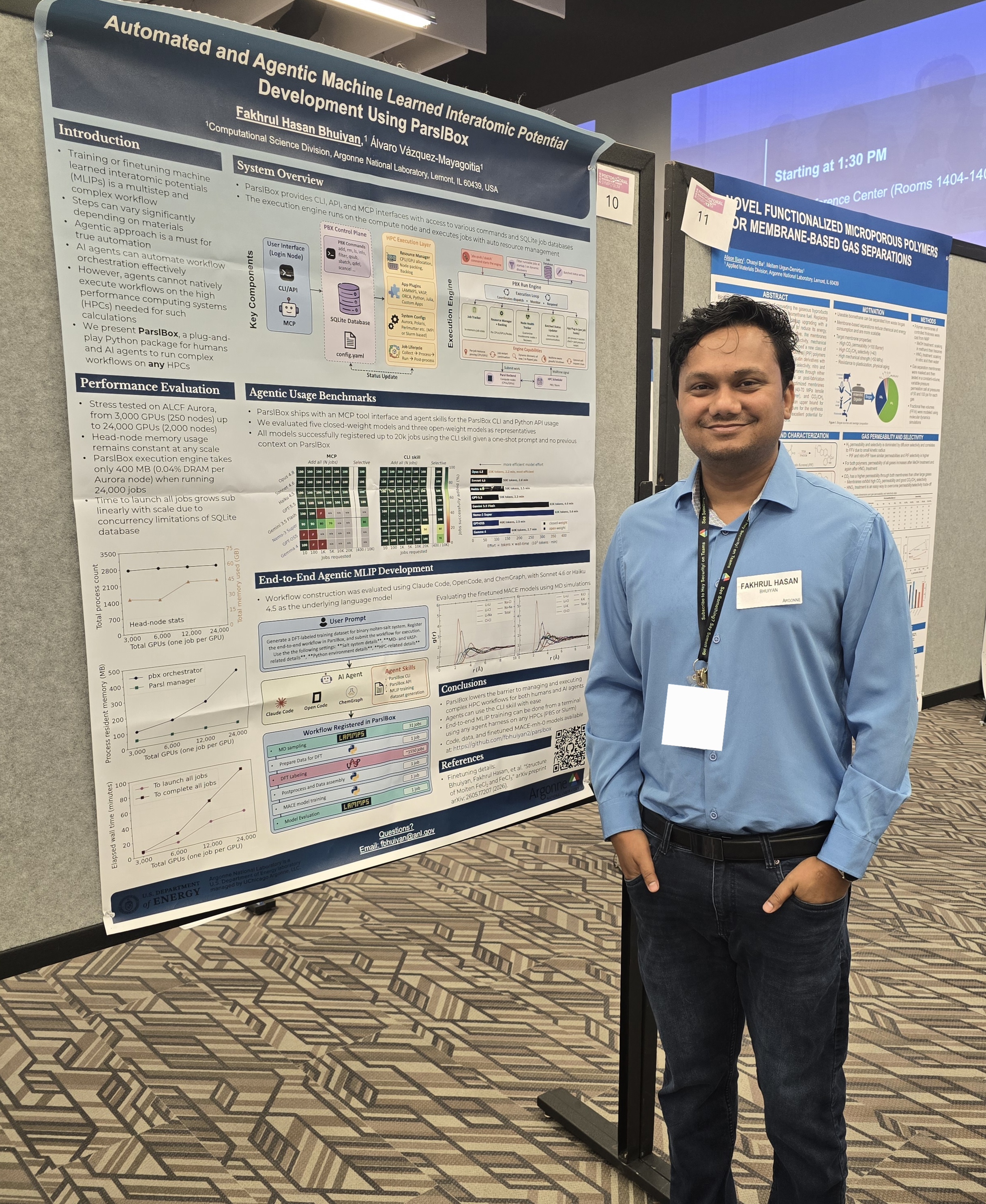
Oct 2026 · Presentation
Argonne Postdoctoral Research and Career Symposium
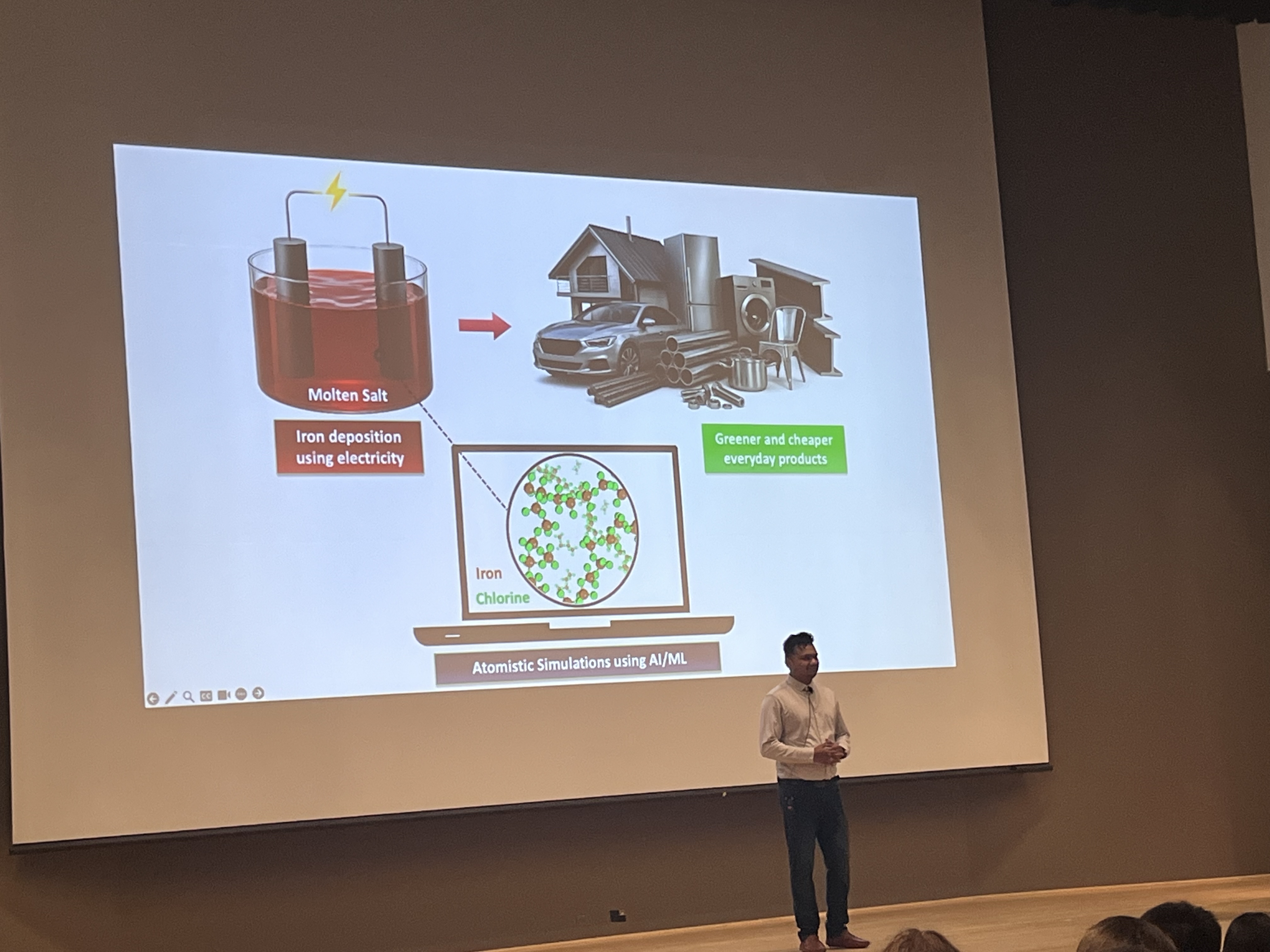
Presented research at Argonne National Laboratory's 2026 postdoctoral symposium.
Computational Science Division · Argonne National Laboratory
I am Fakhrul Hasan Bhuiyan, a computational materials scientist working across atomistic simulation, scientific artificial intelligence (AI), and high-performance computing (HPC) workflows.
Field notes · 2026
Oct 2026 · Presentation
Presented research at Argonne National Laboratory's 2026 postdoctoral symposium.

Sep 2026 · Presentation
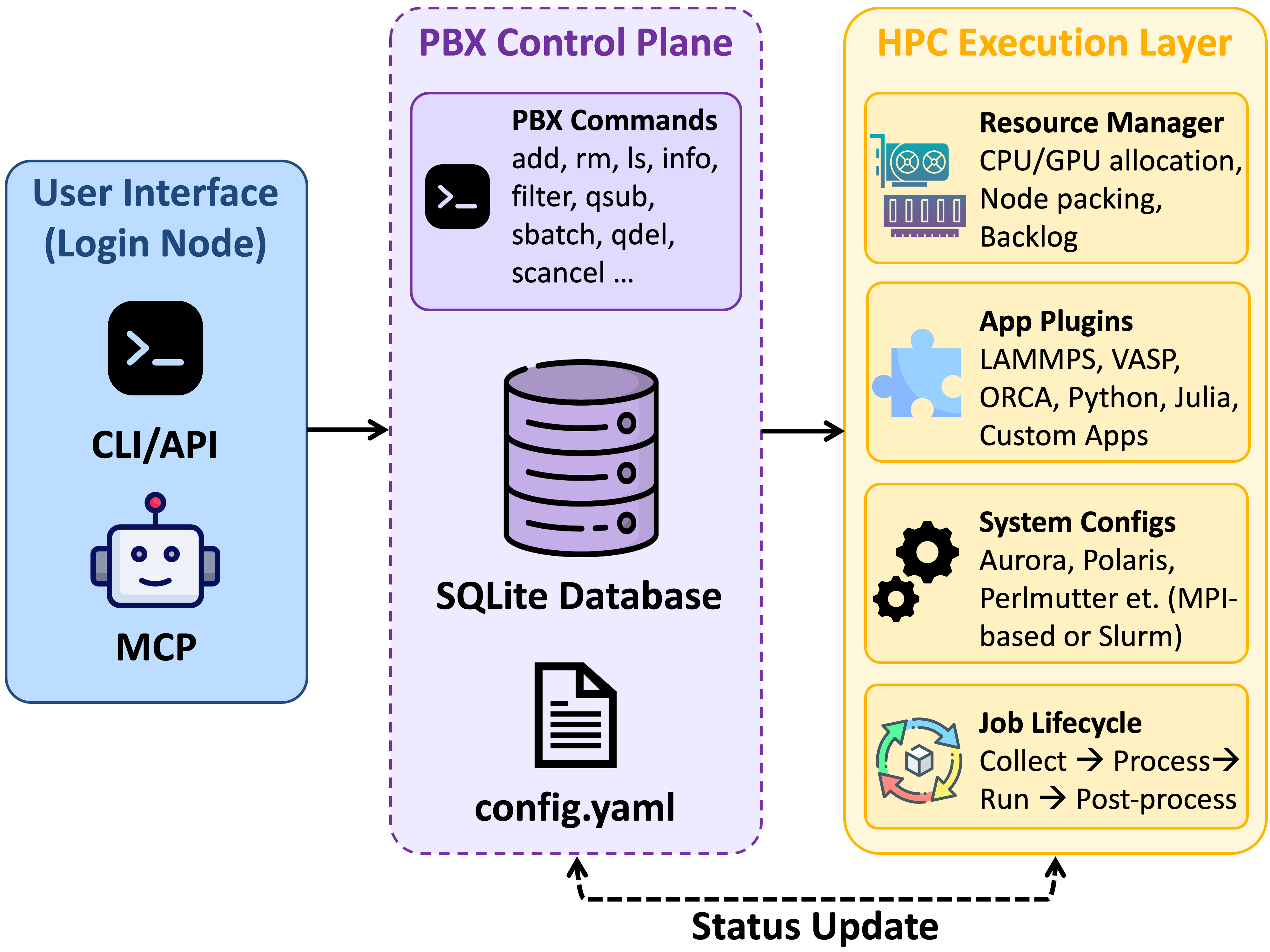
Oral presentation on a computational materials workflow executor for artificial intelligence agents on high-performance computing systems.
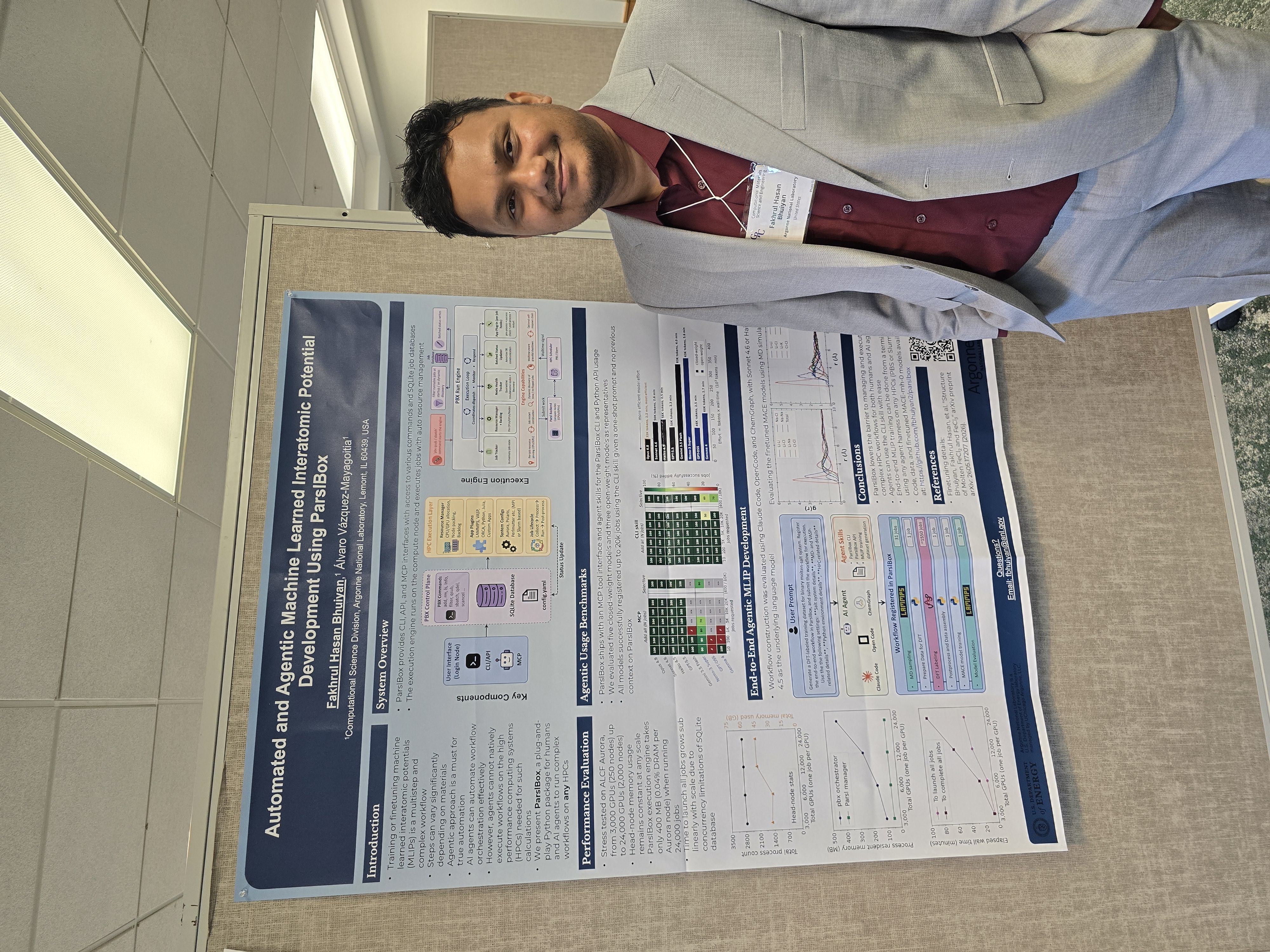
Aug 2026 · Poster
Presented ParslBox workflows for automated and agentic machine-learned interatomic potential development at the Gordon Research Conference (GRC).
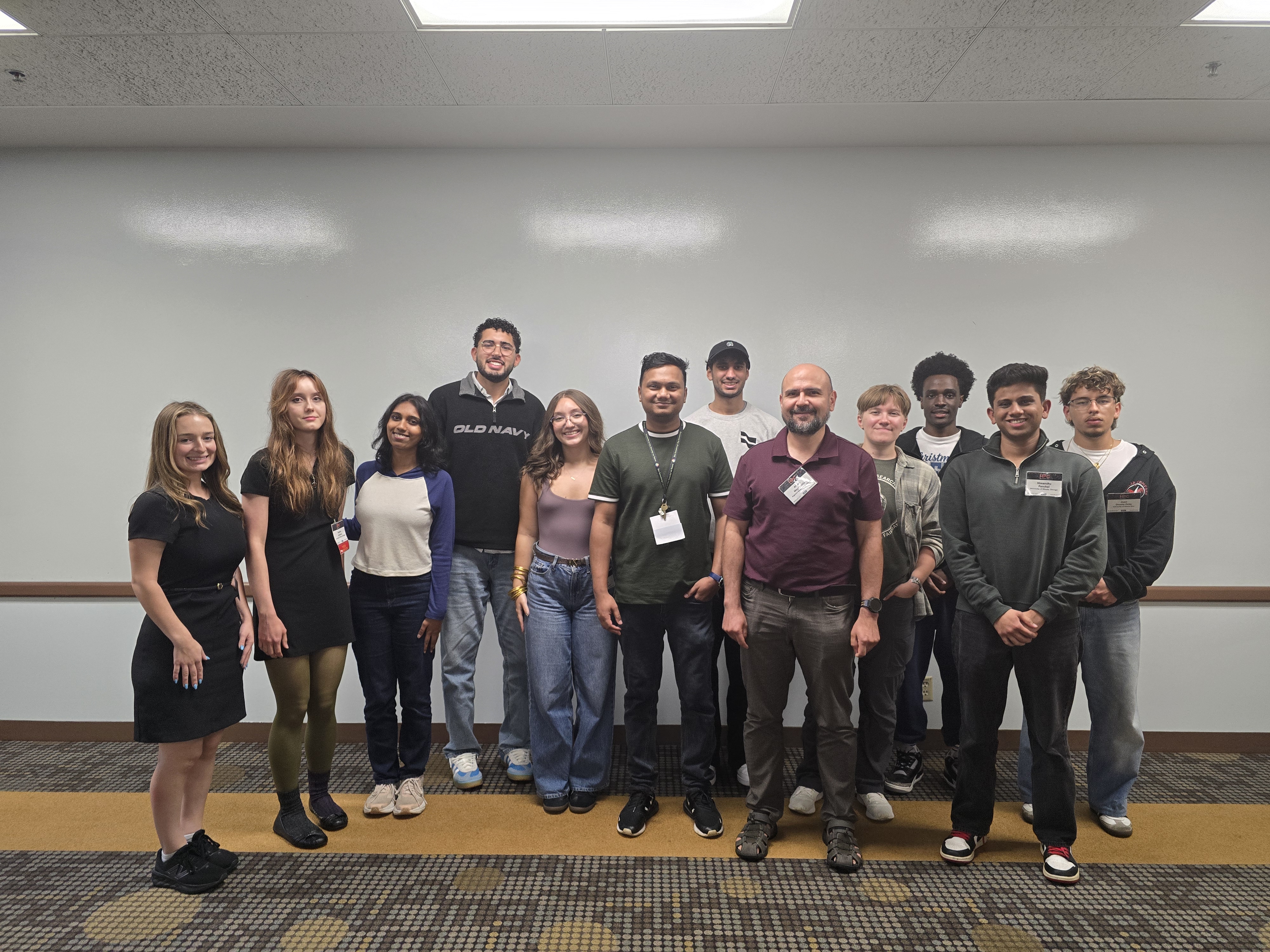
Aug 2026 · Mentoring
Mentored a molecular-property project and delivered a hands-on parallelization demonstration.
Jul 2026 · Recognition
Selected as a campus finalist in Argonne National Laboratory's 2026 Research Slam.
2026 · Accepted
Accepted at AgenticAI4HPC 2026, an SC'26 Workshop.
2026 · Published
Published in ACS Materials Au, combining diffraction, empirical potentials, and MLIPs.
Profile
I develop computational methods that connect atomic-scale science with experimentally relevant materials questions. My work combines density functional theory, molecular dynamics, and machine learning to study molten salts, transition-metal complexes, composite interfaces, lubricants, and mechanically driven chemical reactions.
At Argonne National Laboratory, I develop machine-learned interatomic potentials and scientific machine-learning models. I also create software that makes complex simulation campaigns easier to run on leadership-class computers. This work supports electrochemical steelmaking, molecular screening, thermal-transport calculations, and data extraction from electrochemistry literature.
My Ph.D. research at UC Merced focused on mechanochemistry and tribology. I used reactive molecular dynamics to explain how shear stress changes reaction pathways at sliding interfaces. Across these projects, I work closely with experimental scientists and translate simulations, data, and software into testable physical insights.
Density functional theory, classical and reactive molecular dynamics, reaction pathways, MACE, and ACE.
Graph neural networks, MLIP training and distillation, active learning, and language-model fine-tuning.
Python, ParslBox, LAMMPS, VASP, Linux, Slurm, PBS, Aurora, Polaris, and Sophia.
Selected research
Workflow systems
Agent-ready execution for heterogeneous materials workflows on leadership-class HPC.
Atomistic simulation
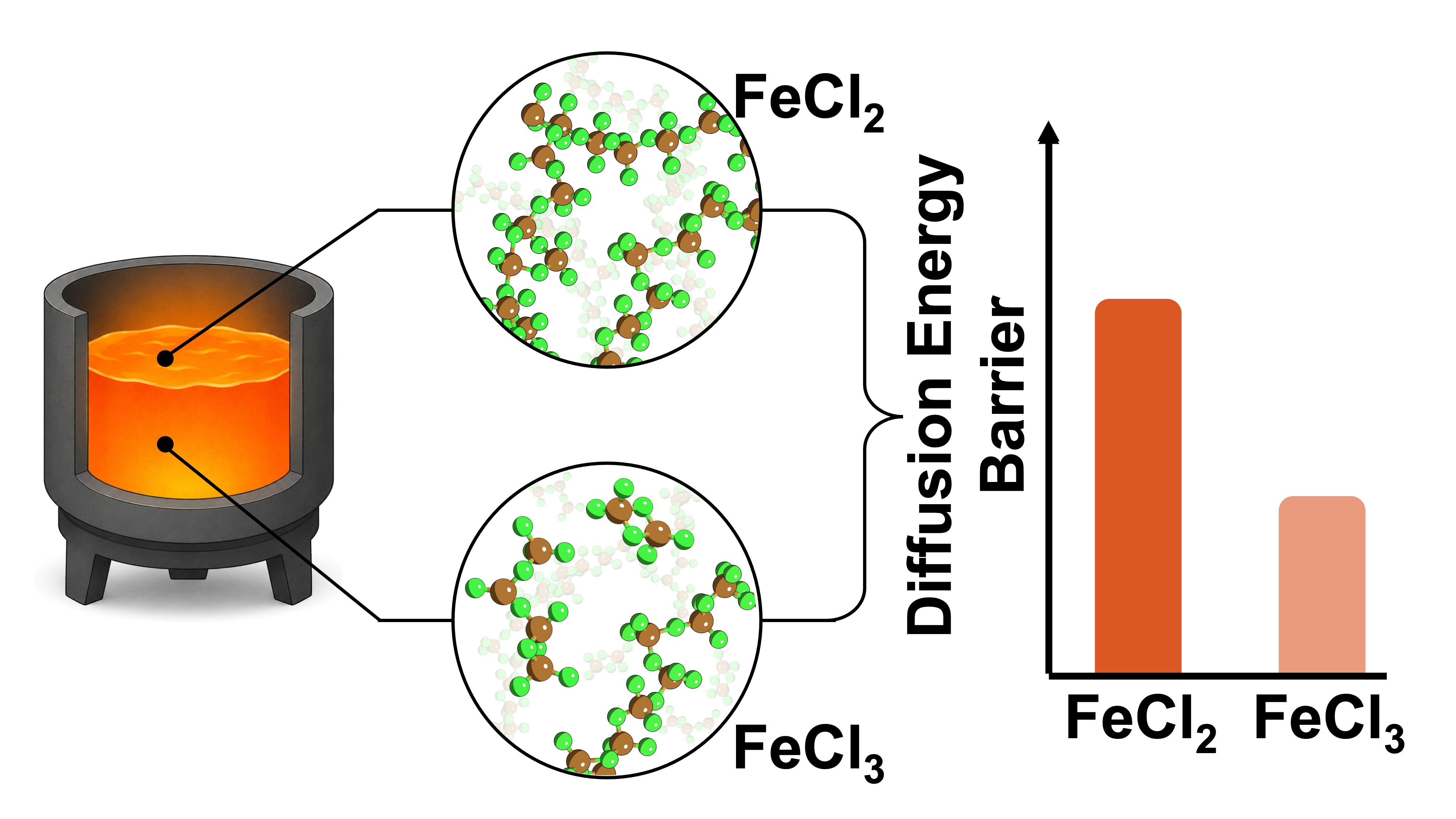
Validated models for Fe chloride melts, trained from high-quality DFT data.
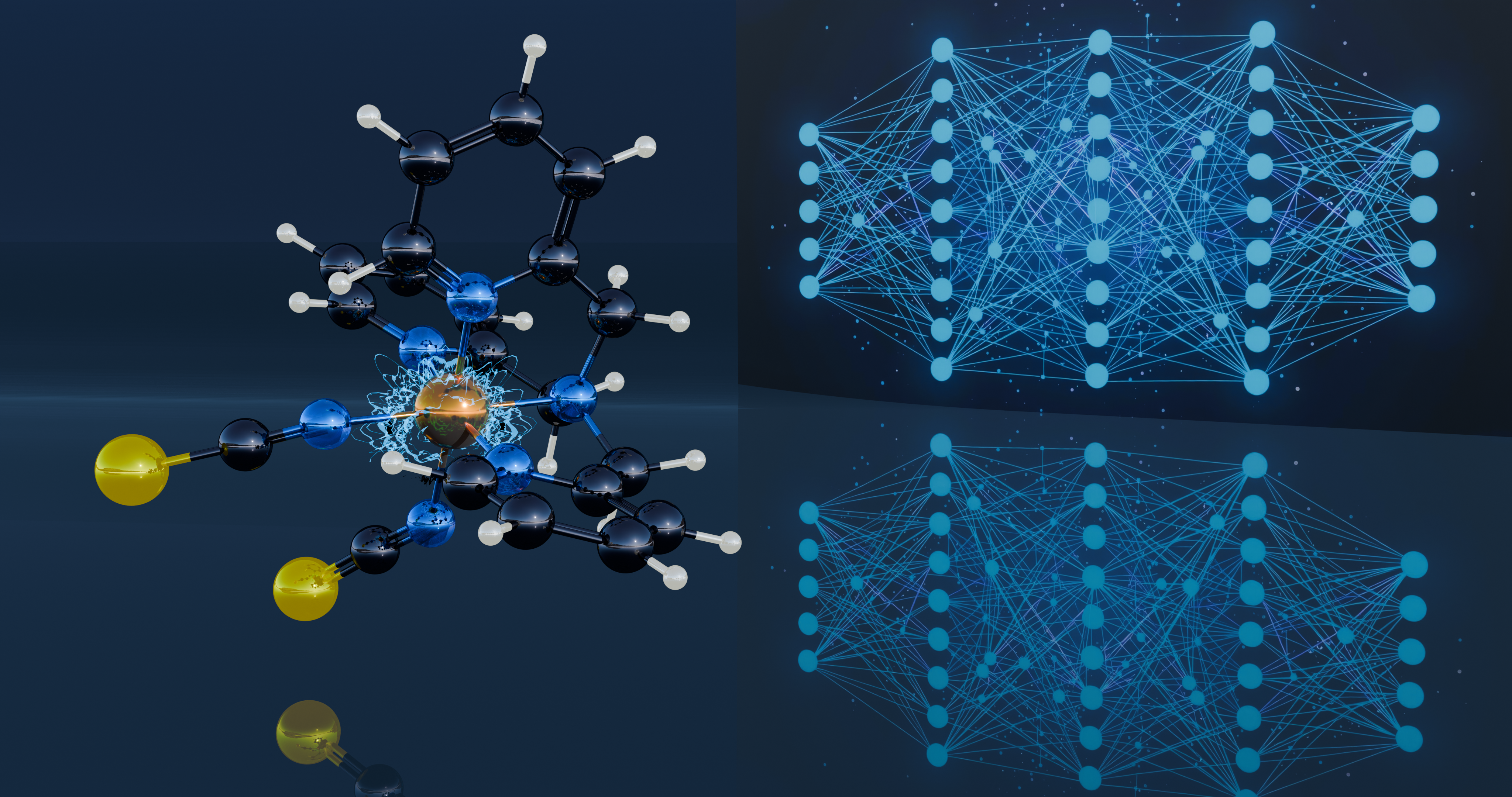
Graph learning
Completed graph-learning pipeline for rapid screening of Fe(II)/Fe(III) complexes.
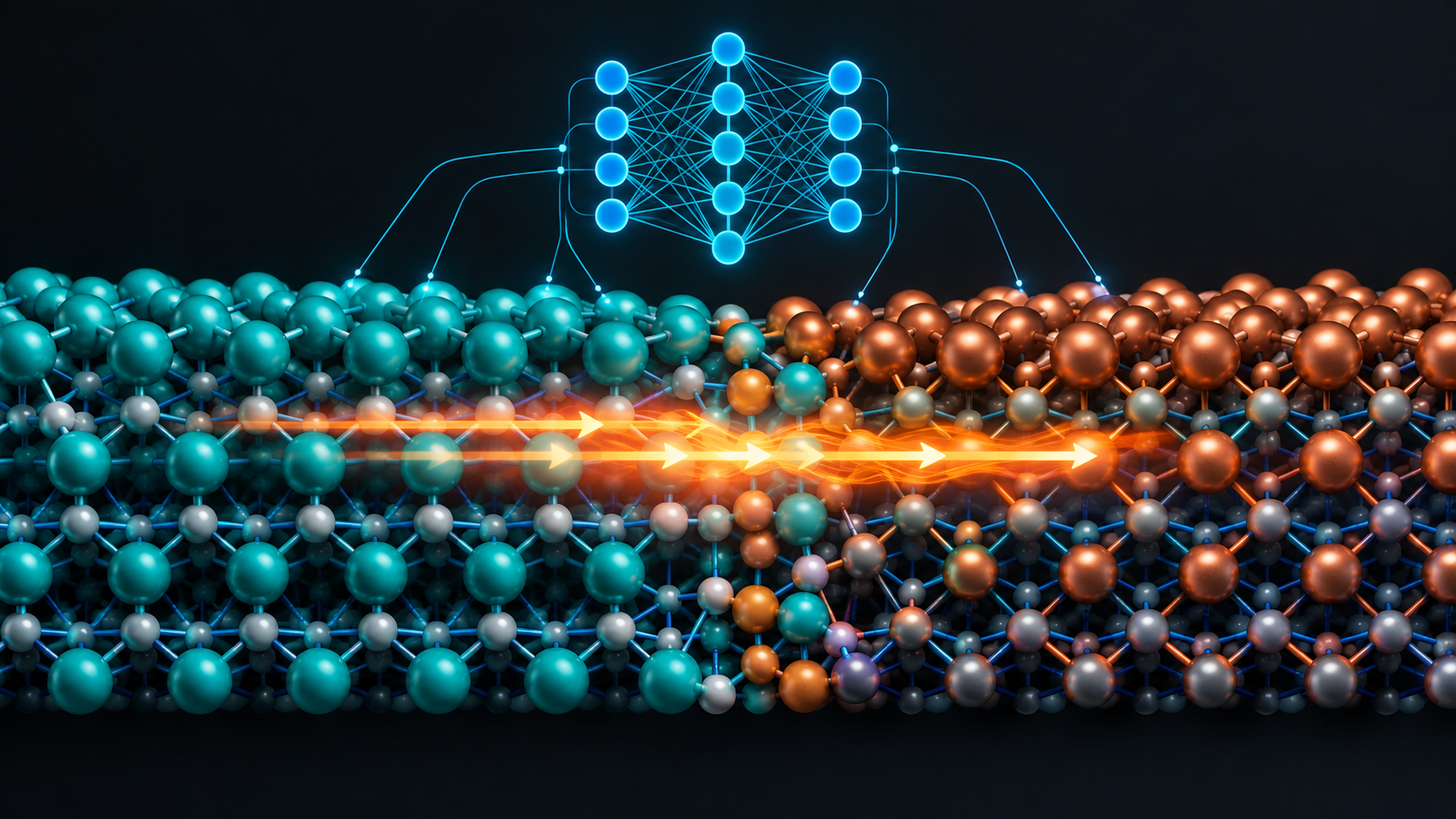
Thermal transport
Distilled force fields and automated workflows for bulk and interface properties.
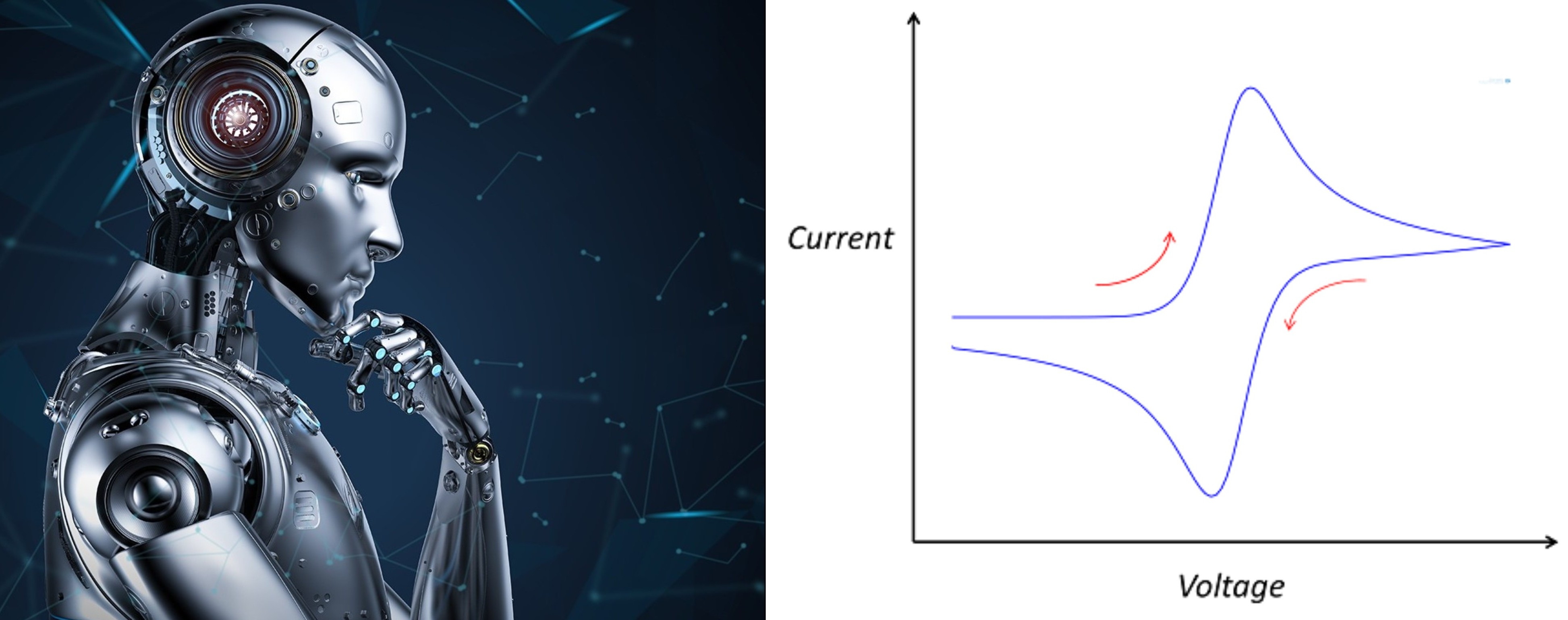
Vision-language models
Literature figures converted into structured data for expert-guided model fine-tuning.
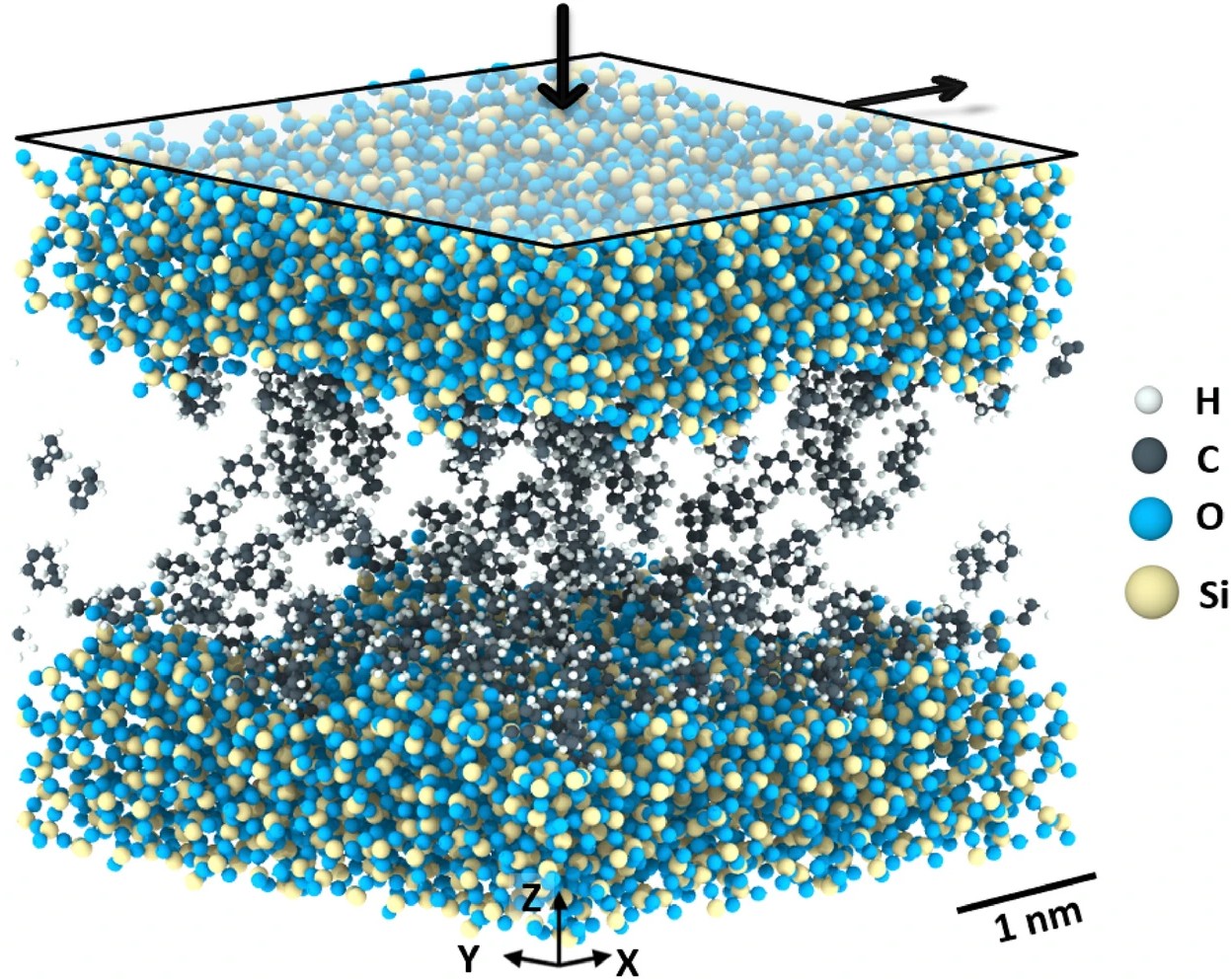
Reactive simulation
Reaction pathways and molecular deformation under shear, linked to tribology experiments.
Correspondence
For research questions, collaborations, or speaking inquiries, send a note through the form or contact me directly.